2020
Operation Warp Speed: mRNA Vaccines
operation-warp-speed-mrna-vaccines
2012
CAR-T Cell Therapy
car-t-cell-therapy
2003
PEPFAR
pepfar
2003
Human Genome Project
human-genome-project
1988
Laparoscopy
laparoscopy
1987
Statins
statins
1980
MRI
mri
1977
PET Scan
pet-scan
1977
Global Eradication of Smallpox
global-eradication-of-smallpox
1976
Genentech & the Birth of Biotech
genentech-the-birth-of-biotech
1973
Telemedicine
telemedicine
1967
Coronary Bypass Surgery
coronary-bypass-surgery
1961
Framingham Heart Study
framingham-heart-study
1955
The Polio Vaccine
the-polio-vaccine
1954
Kidney Transplant
kidney-transplant
1952
Eternal Pacemaker
eternal-pacemaker
1944
Penicillin Scale-Up
penicillin-scale-up
1944
DNA vs. Protein
dna-vs-protein
1937
Blood Banking, A System for Stored Lifesaving
blood-banking-a-system-for-stored-lifesaving
1923
Insulin Mass Production
insulin-mass-production
1862
The Civil War Ambulance Corps and Birth of the Modern EMS
the-civil-war-ambulance-corps-and-birth-of-the-modern-ems
1846
Ether Anesthesia
ether-anesthesia
1820
Establishing Pharmacopeia
establishing-pharmacopeia
1777
Smallpox Inoculation
smallpox-inoculation
1751
Pennsylvania Hospital
pennsylvania-hospital

1862

The Civil War Ambulance Corps and Birth of the Modern EMS

By 1862, the Union Army faced a logistics crisis. We had the science: ether for pain, standardized surgical kits, and a deep understanding of anatomy. Yet, at the Second Battle of Bull Run, thousands of wounded men lay on the field for nearly a week because there was no organized system to retrieve them.

On August 2, 1862, Major Jonathan Letterman, a Union soldier and surgeon, transformed the fatality of the battlefield.  In the chaos of the American Civil War, he invented the Last Mile of healthcare by designing a professional corps and a triage model, codified in General Orders No. 147, that still dictates how we save lives today.
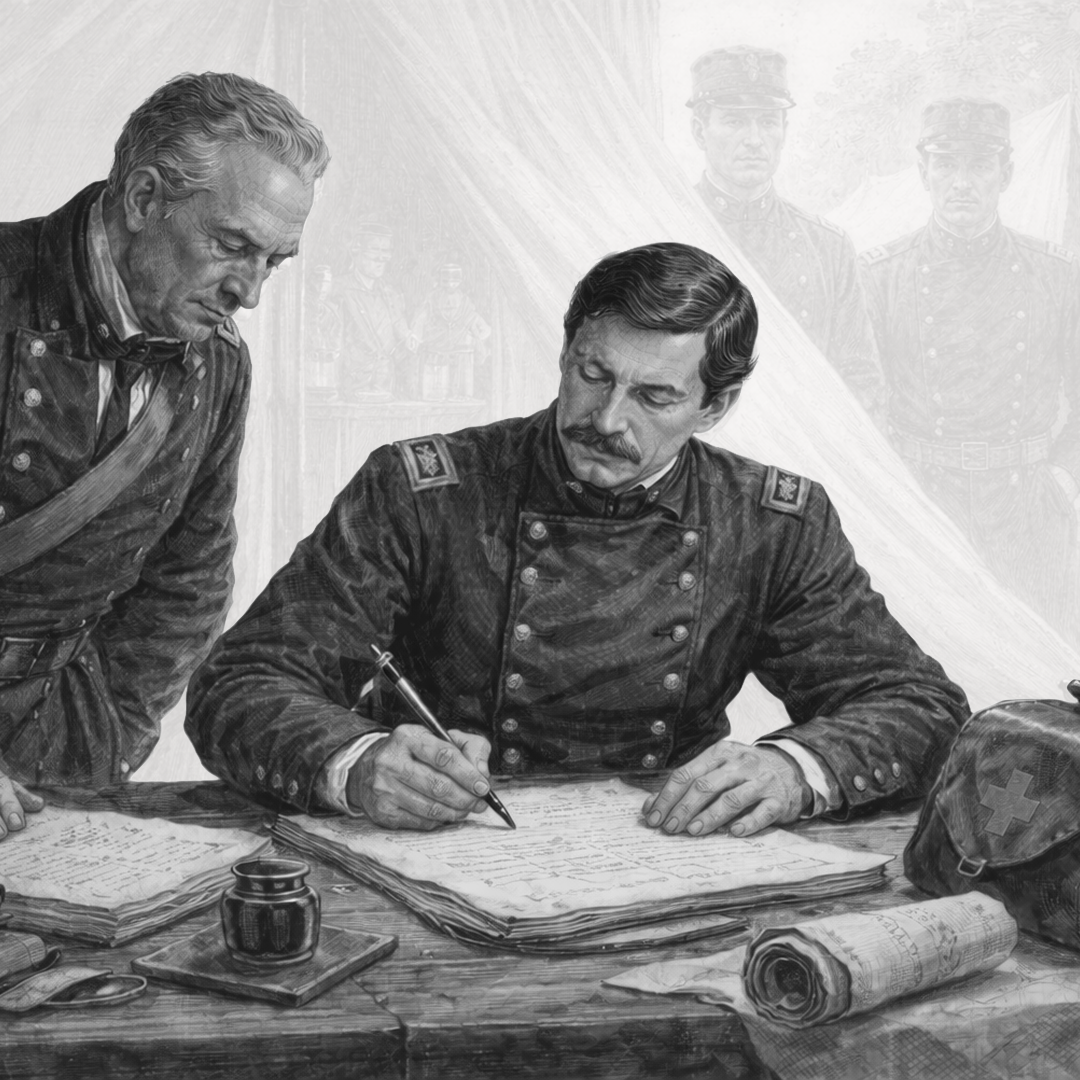
General George McClellan signs the order creating the first dedicated Ambulance Corps for the Army of the Potomac, turning medical transport into a military mandate.

  • Latent Science
    By 1862, surgeons had the tools and the ether. Yet thousands died in the chaos between the front line and the hospital.
  • The Musician Failure
    Before Letterman, carrying the wounded fell to regimental bands and civilian teamsters. With no medical training or authority, they often fled under fire or lost their horses to supply wagons.
  • Professional Corps
    Letterman replaced the bands with a trained Ambulance Corps. These professionals reported to the Medical Department, ensuring patients—not supplies—took priority.
  • The Three-Tiered Blueprint.
    He implemented the first Triage system:
    1. Dressing Stations (Immediate care)
    2. Field Hospitals (Stabilization/Surgery)
    3. Base Hospitals (Long-term recovery)
  • The 24-Hour Shift
    The impact: At Antietam—the bloodiest day in American history—Letterman’s Corps moved 10,000+ wounded men off the field and into care in just 24 hours. Previously, this process took up to a week.

From Brian

Letterman didn’t invent the ambulance. That credit belongs to Baron Dominique-Jean Larrey, Napoleon’s chief surgeon, who in the 1790s debuted "flying ambulances," light carriages designed to rescue the wounded rather than haul supplies.

Letterman’s innovation addressed a basic challenge of medicine: how to efficiently oversee and prioritize patient care.

In the Napoleonic model, ambulances were tied to specific units and often diverted by generals. Letterman removed medical transport from Quartermaster and combat commander control, creating a centralized medical-led bureaucracy. He replaced the musician-stretcher-bearer with a professional corps under doctors.

The result is the system we live with. Every modern EMS protocol, from the Golden Hour logic of rapid trauma intervention to the three-tiered triage system in ERs and disaster zones, is a direct evolution of the 1862 General Orders.

The impact is measurable. Before these reforms, mortality for wounded soldiers who reached a hospital was roughly 25%. Today, survival rates for trauma patients who reach a Level 1 trauma center exceed 90%. Breakthrough molecules save lives they can reach.

Read On LinkedIn