The origin story of penicillin is a series of improbable flukes. In 1928, Alexander Fleming left a petri dish out while on vacation; a stray mold spore drifted through a window and landed right on his bacteria culture. A rare London cold snap followed, allowing the mold to grow. Then, a subsequent heatwave allowed the bacteria to fill in the plate, revealing the famous dead zone where the mold had done its work. Without that specific weather sequence, the discovery might never have happened.
But as we look at how that fluke became a global resource, we see the patterns of American health innovation: treating health as national security (the Revolution) and the drive for standardized care (the Civil War).
Even the US Pharmacopeia played a role. This is the official national rulebook for drug purity and strength. By standardizing the recipe, the U.S. ensured that a dose produced in a Peoria vat was identical to the one a medic carried onto Omaha Beach.
By de-risking the enormous capital costs of industrialization and compelling private rivals to share proprietary blueprints, the government created a repeatable engine for medical progress. It proved that the gap between a lucky discovery and a global commodity isn't bridged by science alone, but by a coordinated alignment of public mandate and private execution.
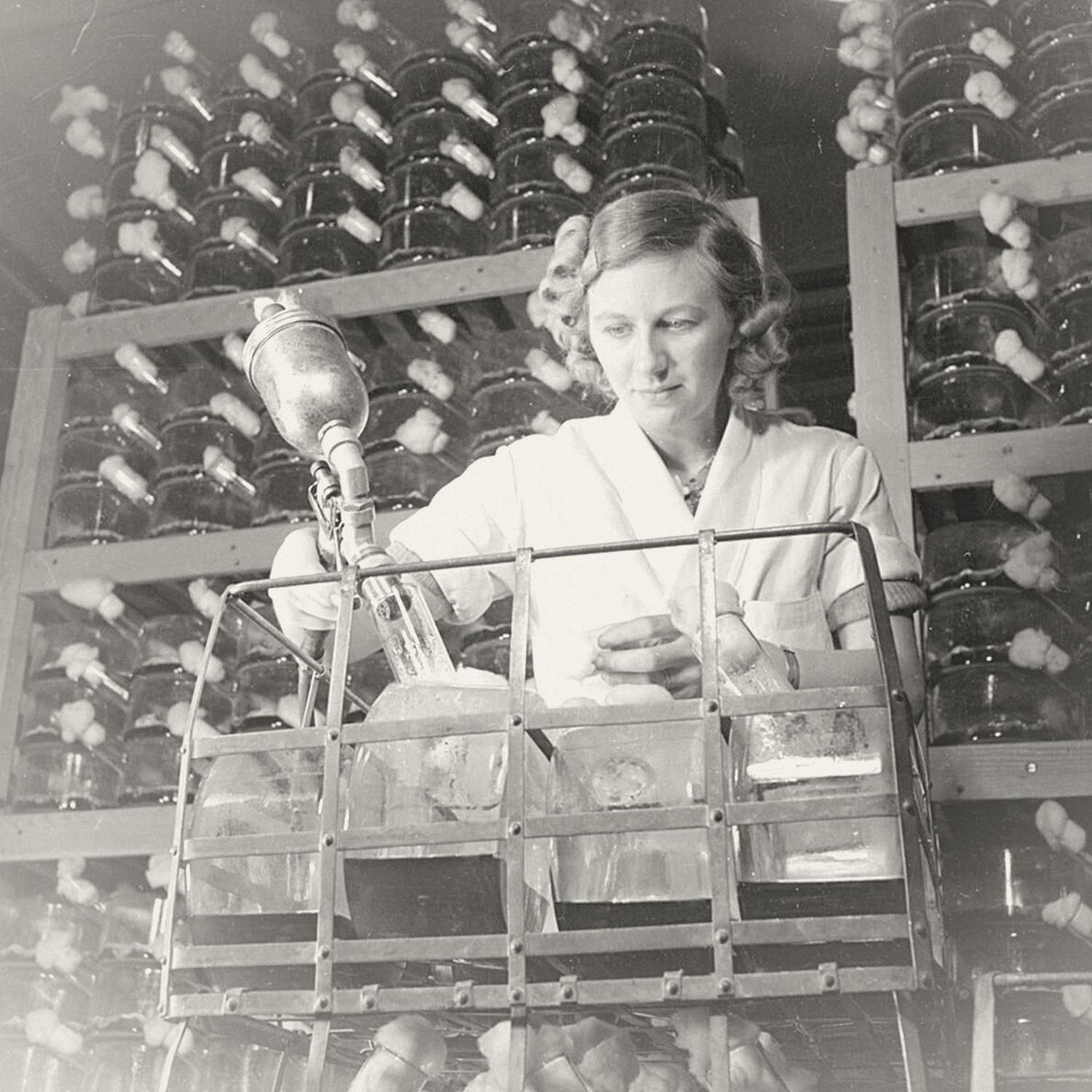
Allied forces landed on the beaches of Normandy. In their packs, they brought 2.3 million doses of penicillin, a supply that couldn’t have existed just two years earlier.


Twenty-five health innovations that changed the world.


I am allergic to many good things – dogs, cats... and penicillin.
While I didn’t appreciate it at the time, penicillin was more than just a panacea to many childhood woes. Its discovery marked a fundamental shift. Before its discovery and synthesis, medical treatments focused on prevention through cleanliness or using harsh chemicals that were often toxic to the patient and the germ.
Penicillin worked with a new level of precision. Penicillin targets the specific way bacteria build their rigid cell walls. Because human cells don't have these walls, we have flexible membranes, the drug ignores the patient and attacks only the bacteria. Penicillin weakens the bacteria’s cell walls until the pressure inside the cell causes the bacteria to pop and dissolve. It was the first bactericidal antibiotic, a tool that could actively dismantle a systemic infection from within without harming the person fighting it.
That said, it was nearly fifteen years between the discovery of penicillin and its global impact. That leap was driven by deep cooperation between private industry and the U.S. government to turn a biological fluke into an industrial engine.