2020
Operation Warp Speed: mRNA Vaccines
operation-warp-speed-mrna-vaccines
2012
CAR-T Cell Therapy
car-t-cell-therapy
2003
PEPFAR
pepfar
2003
Human Genome Project
human-genome-project
1988
Laparoscopy
laparoscopy
1987
Statins
statins
1980
MRI
mri
1977
PET Scan
pet-scan
1977
Global Eradication of Smallpox
global-eradication-of-smallpox
1976
Genentech & the Birth of Biotech
genentech-the-birth-of-biotech
1973
Telemedicine
telemedicine
1967
Coronary Bypass Surgery
coronary-bypass-surgery
1961
Framingham Heart Study
framingham-heart-study
1955
The Polio Vaccine
the-polio-vaccine
1954
Kidney Transplant
kidney-transplant
1952
Eternal Pacemaker
eternal-pacemaker
1944
Penicillin Scale-Up
penicillin-scale-up
1944
DNA vs. Protein
dna-vs-protein
1937
Blood Banking, A System for Stored Lifesaving
blood-banking-a-system-for-stored-lifesaving
1923
Insulin Mass Production
insulin-mass-production
1862
The Civil War Ambulance Corps and Birth of the Modern EMS
the-civil-war-ambulance-corps-and-birth-of-the-modern-ems
1846
Ether Anesthesia
ether-anesthesia
1820
Establishing Pharmacopeia
establishing-pharmacopeia
1777
Smallpox Inoculation
smallpox-inoculation
1751
Pennsylvania Hospital
pennsylvania-hospital

1988

Laparoscopy

We forget that until recently, nearly all surgery was defined by the Big Cut.

To fix something as routine as a gallstone or a hernia, a surgeon had to create a new, secondary trauma, a six-inch incision through muscle and nerve. In many cases, the treatment was so physically taxing that patients would wait until a crisis to seek help. They chose chronic pain over the violence of the operating table.

This is a central conundrum of medicine and plans of treatment: When does the treatment stop being a frightening addition to the disease?

When the laparoscopic cholecystectomy—the ability to operate through a keyhole—emerged in 1988, a whole category of ailments suddenly could be reliably remedied with significantly less trauma and recovery.

It begs a broader question in modern medical innovation: where else can we make it less painful to be healthy?
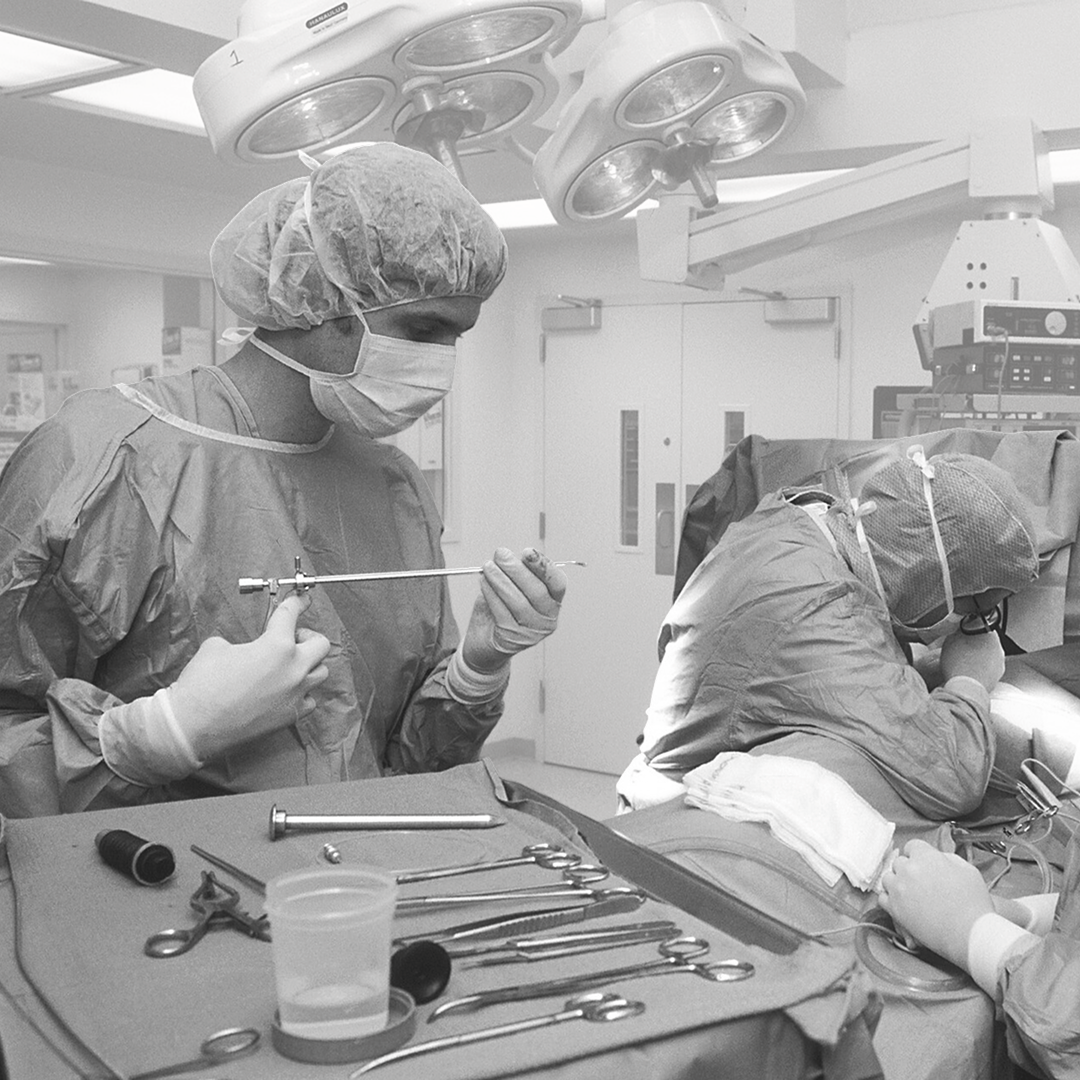
Dr. Eddie Joe Reddick and Dr. Douglas Olsen performed the first laparoscopic cholecystectomy (gallbladder removal) in the United States at Baptist Hospital in Nashville.

  • The Keyhole
    Reddic and Olsen utilized a laparoscope, a thin tube with a camera, to replace the traditional 6-to-10 inch incision with four small punctures.
  • A New Way In
    Before 1988, gallbladder surgery required a subcostal incision that severed abdominal muscles, necessitating a 5-to-7 day hospital stay. The new keyhole technique allowed surgeons to navigate the abdomen using carbon dioxide gas to create working space, leaving marks no larger than a dime.
  • The Video Interface
    The innovation relied on the Video-Laparoscope, which coupled fiber-optic light cables with a miniature CCD (charge-coupled device) camera. For the first time, the surgical team operated while looking at a high-resolution monitor.
  • The Speed of Adoption
    By 1992, over 80% of gallbladder surgeries in the U.S. were laparoscopic. This remains one of the fastest technology transfers in the history of American medicine.
  • Clinical Success
    The clinical outcome was a reduction in recovery time from six weeks to approximately one week.
  • Economic Velocity
    By 1990, data showed that the shift to outpatient gallbladder surgery saved the U.S. healthcare system hundreds of millions of dollars in bed-day costs and returned patients to the workforce in a fraction of the time.

From Brian

By reducing the physical cost of surgery, we fundamentally changed who could be a patient. The elderly and the frail, who might not have survived a major open-cavity procedure, could now be treated safely. The cost of proactive and early intervention has gone down. The bar for health has gone up.

Read On LinkedIn