For 3,000 years, smallpox was among the most virulent diseases on Earth. Able to spread quickly through crowds and with a 20-30% fatality rate, smallpox killed an estimated 300 million people in the 20th century alone.
While a vaccine had existed since 1796 (discovered by Edward Jenner), its global use was limited: early versions were unstable at room temperature and required professional medical training to administer.
But smallpox also possessed a unique biological vulnerability: it only exists in humans. Unlike diseases that can hide in animal populations or environmental reservoirs, smallpox could only move person-to-person. If you could eliminate it in people, you could eliminate it entirely.
In 1966, the U.S. convinced the World Health Assembly to launch the Intensified Smallpox Eradication Program.
To engineer such a massive feat, Americans like D.A. Henderson led a three-fold shift:
Strategic: They pivoted from Mass vaccination to Surveillance and Containment, where each identified case would be met with a targeted wave of vaccinations.
Practical: They enabled a low-skill, high-scale workforce by using the stainless steel, bifurcated needle, a tool so simple a volunteer could master it in minutes.
Diplomatic: They reached across the Iron Curtain, aligning with the Soviet Union to turn a shared biological threat into a rare moment of Cold War cooperation.
Since eradication, it is estimated that approximately 2 million lives are spared every single year.
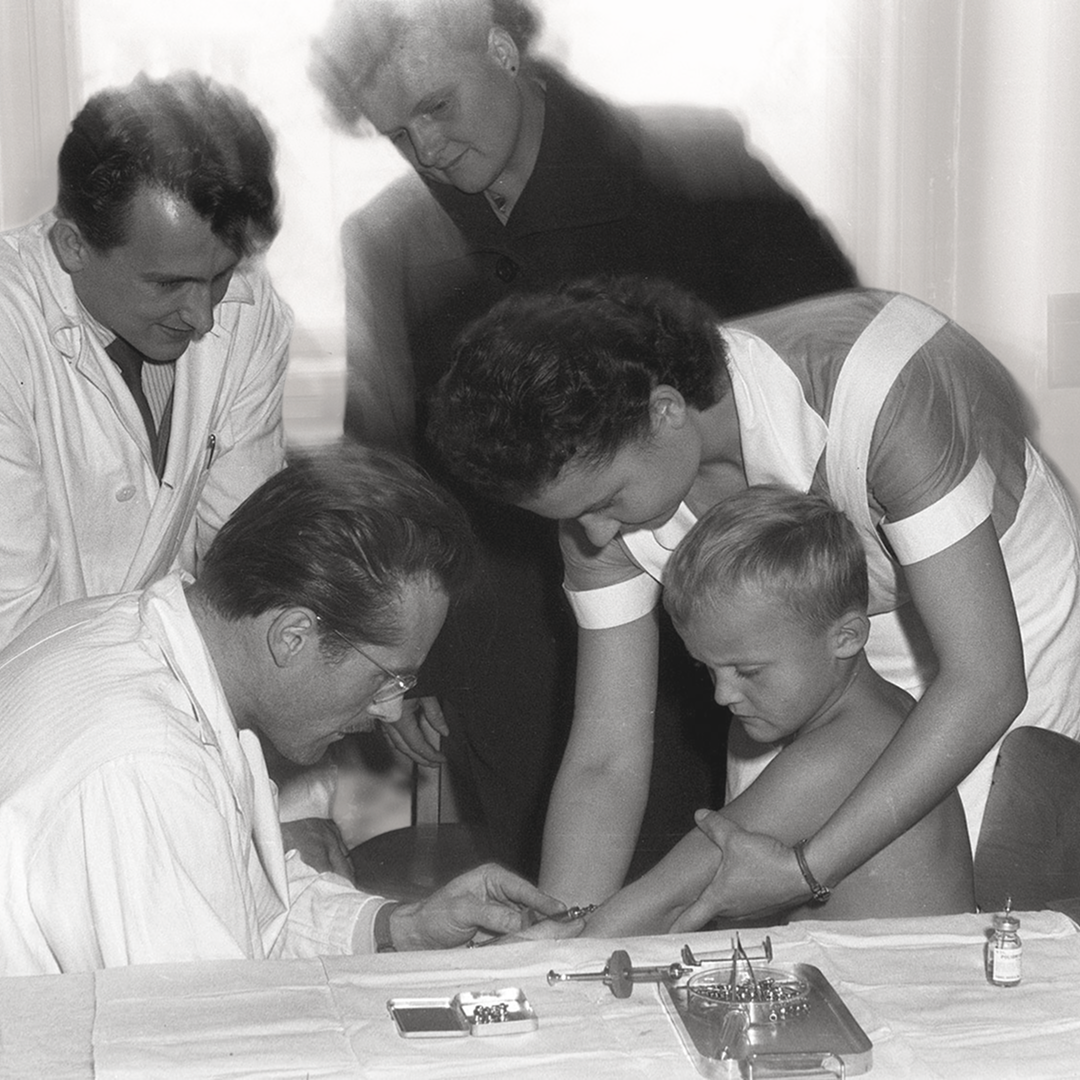
The U.S. and the WHO led the first and only successful effort to completely eliminate a human disease from the planet.


Twenty-five health innovations that changed the world.



There are two things that stand out in this story for me.
The first is the scale of cooperation achievable when there is a greater enemy or, perhaps more aspirationally, a greater ambition. Competition has an important place in our society, but the US / USSR didn’t take a space race approach—they agreed to build the rocket together.
The second is that innovation comes in all shapes and sizes. A few weeks ago, it was bringing NASA - National Aeronautics and Space Administration tech to the desert. This week, it was reimagining a needle. By making it from stainless steel, it could be sterilized and reused where resources were low. Using a two-pronged design, it held an exact dose and facilitated a take, the visible scar that served as proof of immunity.
In all cases of innovation, people lay aside notions and frameworks to achieve the magnificent. Perhaps that is why science can make dreamers of pragmatists and pragmatists of dreamers.