2020
Operation Warp Speed: mRNA Vaccines
operation-warp-speed-mrna-vaccines
2012
CAR-T Cell Therapy
car-t-cell-therapy
2003
PEPFAR
pepfar
2003
Human Genome Project
human-genome-project
1988
Laparoscopy
laparoscopy
1987
Statins
statins
1980
MRI
mri
1977
PET Scan
pet-scan
1977
Global Eradication of Smallpox
global-eradication-of-smallpox
1976
Genentech & the Birth of Biotech
genentech-the-birth-of-biotech
1973
Telemedicine
telemedicine
1967
Coronary Bypass Surgery
coronary-bypass-surgery
1961
Framingham Heart Study
framingham-heart-study
1955
The Polio Vaccine
the-polio-vaccine
1954
Kidney Transplant
kidney-transplant
1952
Eternal Pacemaker
eternal-pacemaker
1944
Penicillin Scale-Up
penicillin-scale-up
1944
DNA vs. Protein
dna-vs-protein
1937
Blood Banking, A System for Stored Lifesaving
blood-banking-a-system-for-stored-lifesaving
1923
Insulin Mass Production
insulin-mass-production
1862
The Civil War Ambulance Corps and Birth of the Modern EMS
the-civil-war-ambulance-corps-and-birth-of-the-modern-ems
1846
Ether Anesthesia
ether-anesthesia
1820
Establishing Pharmacopeia
establishing-pharmacopeia
1777
Smallpox Inoculation
smallpox-inoculation
1751
Pennsylvania Hospital
pennsylvania-hospital

1976

Genentech & the Birth of Biotech

What is Biotech investing, really?

At its core, Biotech is the bet that Frontier Science + Risk Capital = Human Health.

Today, it is a $1.5 trillion global industry driven by over 3,000 firms. In the U.S. alone, venture capitalists pour roughly $30 billion into the sector every year.

This model is surprisingly young. It didn’t exist until 1976.

Before then, drug discovery was a Big House game. Innovation happened inside the walls of massive chemical conglomerates. There was limited risk capital for biology, and it was nearly impossible for a small university team or an independent startup to bridge the gap from a theory or a test tube to a patient.

That changed in a San Francisco bar when a 28-year-old venture capitalist made a bet on a scientist who only planned to give him ten minutes.
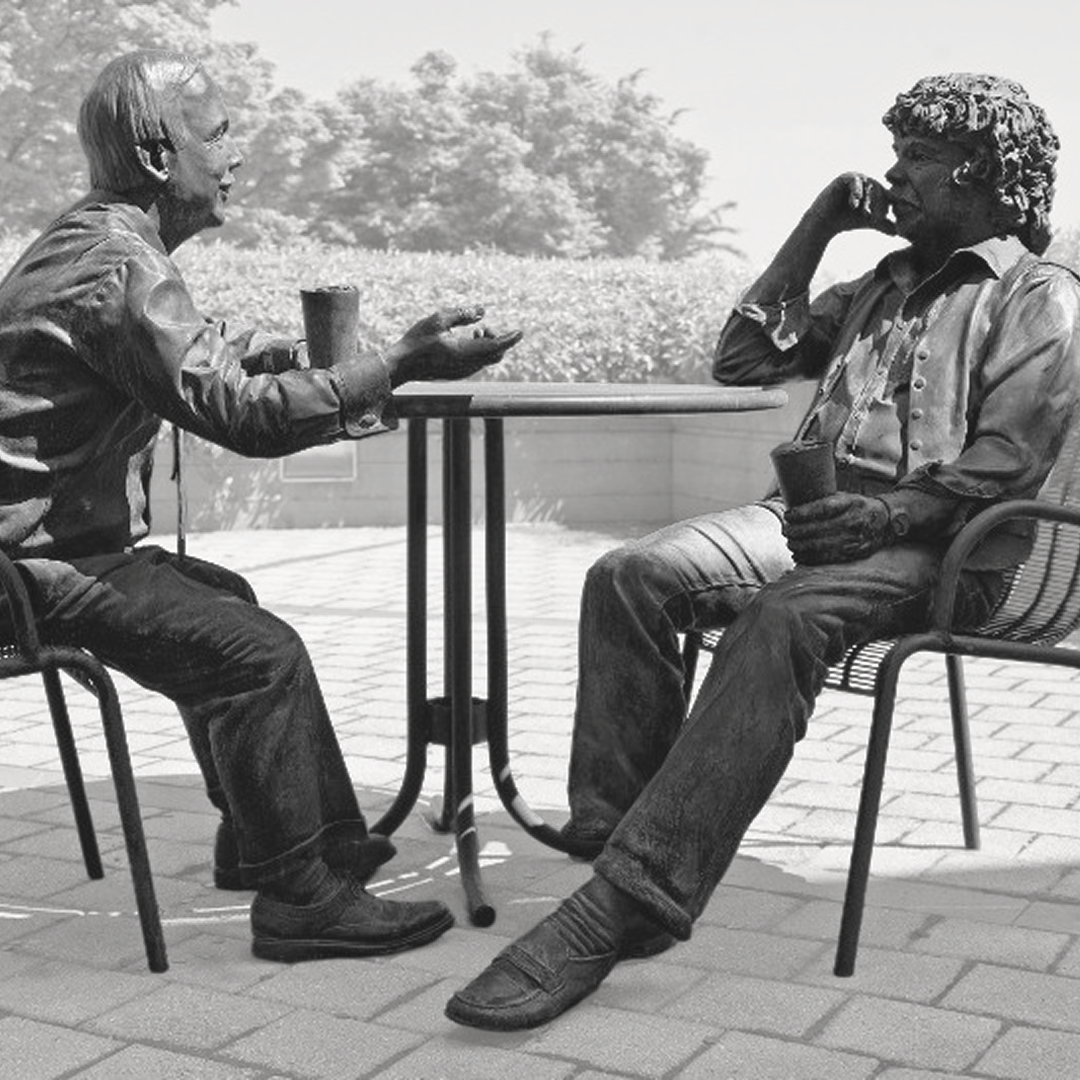
Churchill’s Bar, San Francisco. Bob Swanson, recently laid off from his venture capital firm, meets DNA pioneer Herb Boyer. Boyer grants him 10 minutes. They stay for three hours.

  • Trapped Discovery
    Boyer had a revolutionary idea: use bacteria’s DNA to synthetically print human medicine. But traditional labs were terrified of the risks, and banks wouldn't fund a company with no revenue or factory.
  • The $100,000 Gamble
    Swanson convinced his former bosses at Kleiner Perkins to put up $100,000 to fund a new company - Genentech.
  • The Proof Point
    To prove the model, they targeted insulin. At the time, it was harvested from the pancreases of slaughtered livestock. 10,000 lbs of animal organs produced just one pound of medicine. Genentech bet they could code and produce the same drug in a bioreactor.
  • Programming the Factory
    Boyer’s Molecular Scissors pasted human instructions into bacteria. In 1978, Genentech scientists successfully synthesized human-identical insulin.
  • 1980: The Big Bang
    IPO Genentech went public before it had a single product on the shelf. In 20 minutes, the stock price jumped from $35 to $89 - at the time the fastest rise in Wall Street history.
  • The Modern Blueprint
    The Swanson-Boyer blueprint of using private capital to fund medical innovation and new company creation is the basis for much of today’s medical innovation.

From Brian

Advancements in human health happen when experts in different fields – chemistry, biology, biostatistics and commercial strategy, business strategy, and financial strategy – come together to build the right medicine and the right plan. It also takes a team that is committed to both ambition and humility.

The Swanson-Boyer partnership, two complementary and outstanding innovators, is a blueprint for our belief in building teams that can ultimately improve lives.

This weaving of disciplines and dispositions is the fundamental metaphor that gave name to our firm, Braidwell, five years ago. Genentech is an inspiration in many ways.

The company recently celebrated its 50th Anniversary.  In a celebratory video Bob Swanson recalls, “We really wanted to create drugs that would make a difference … and build a company that would make a difference… and if we were successful, we’ll have done good and we can also do well.” https://www.gene.com/stories/celebrating-50-years-of-science-and-changing-lives

Read On LinkedIn