2020
Operation Warp Speed: mRNA Vaccines
operation-warp-speed-mrna-vaccines
2012
CAR-T Cell Therapy
car-t-cell-therapy
2003
PEPFAR
pepfar
2003
Human Genome Project
human-genome-project
1988
Laparoscopy
laparoscopy
1987
Statins
statins
1980
MRI
mri
1977
PET Scan
pet-scan
1977
Global Eradication of Smallpox
global-eradication-of-smallpox
1976
Genentech & the Birth of Biotech
genentech-the-birth-of-biotech
1973
Telemedicine
telemedicine
1967
Coronary Bypass Surgery
coronary-bypass-surgery
1961
Framingham Heart Study
framingham-heart-study
1955
The Polio Vaccine
the-polio-vaccine
1954
Kidney Transplant
kidney-transplant
1952
Eternal Pacemaker
eternal-pacemaker
1944
Penicillin Scale-Up
penicillin-scale-up
1944
DNA vs. Protein
dna-vs-protein
1937
Blood Banking, A System for Stored Lifesaving
blood-banking-a-system-for-stored-lifesaving
1923
Insulin Mass Production
insulin-mass-production
1862
The Civil War Ambulance Corps and Birth of the Modern EMS
the-civil-war-ambulance-corps-and-birth-of-the-modern-ems
1846
Ether Anesthesia
ether-anesthesia
1820
Establishing Pharmacopeia
establishing-pharmacopeia
1777
Smallpox Inoculation
smallpox-inoculation
1751
Pennsylvania Hospital
pennsylvania-hospital

1961

Framingham Heart Study

For most of history, a heart attack was a sudden crisis that medicine could only react to after the damage was done. In 1948, the U.S. Public Health Service launched a study in Framingham, Massachusetts to stop waiting for the crisis and start looking for the cause. By tracking the heart health of an entire town for decades, researchers redefined how we understand the relationship between daily habits and long-term survival.
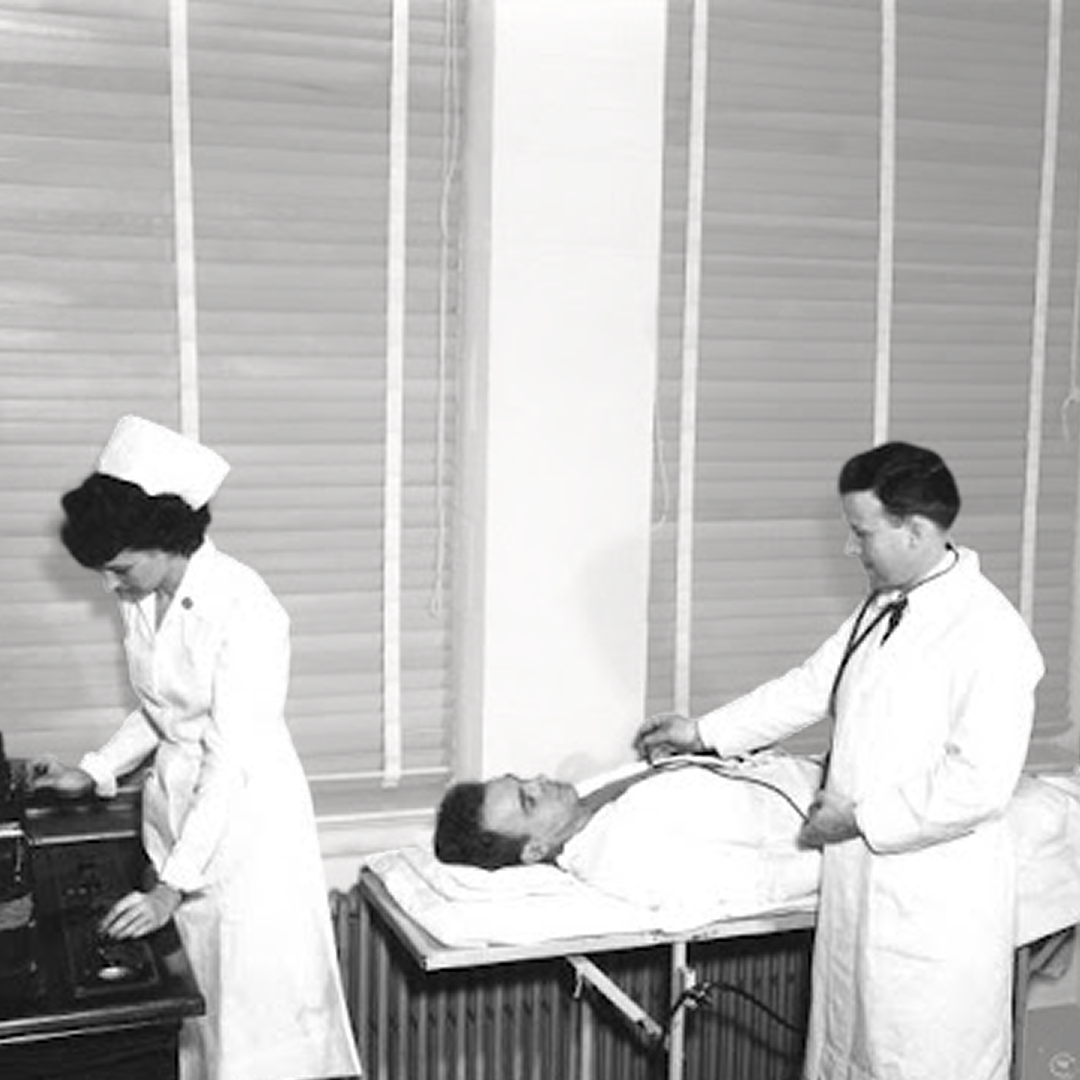
A landmark longitudinal study of heart disease was published in the Annals of Internal Medicine.

  • Hypertension
    In the 1940s, doctors believed blood pressure naturally increased with age and required no intervention.
  • Research
    In 1948, the U.S. Public Health Service initiated with 5,209 healthy men and women between the ages of 30 and 62. Researchers conducted physical exams and lifestyle interviews every two years to identify patterns before symptoms ever appeared.
  • Findings
    The study provided the first statistical proof that high cholesterol, high blood pressure, and smoking independently predicted heart disease. The data proved high blood pressure was a primary killer, leading to the first aggressive treatments for hypertension.
  • Risk Factors
    Before this study, there was no clinical term for a risk factor. Framingham researchers introduced the concept, shifting from treating symptoms to managing statistical probabilities.
  • Three Generations
    The study expanded to include the children of the original participants in 1971, and their grandchildren in 2002. This created a unique dataset for understanding how genetics and environment intersect over a 75-year span.
  • Mortality Drop
    The insights from this single town, informing everything from statin use to tobacco cessation, helped drive a 70% drop in U.S. cardiovascular mortality rates since the study began.

From Brian

The Framingham Heart Study is a lesson in the power of patience and longitudinal science. While headlines can seem to reflect sudden breakthroughs, Framingham proved that data gathered over decades can drastically change the standard of care.

Because of these 5,000 volunteers, we have a map of the variables we can measure and manage. This study provided the blueprint for the preventive screenings we undergo today, from basic blood work to advanced genomic risk scoring.

Read On LinkedIn