Medical progress is often framed as a series of discoveries, a new drug, a new treatment, a breakthrough. At Braidwell, we recognize that medical infrastructure is as essential for advancing human health as new drugs.
By 1820, the concept of a Pharmacopeia, a master recipe book for medicine, was a well-established European excellence. Medical centers like London, Edinburgh, and Paris had rigorous guides that were usually issued as official mandates by the state or royal colleges.
But as the young United States expanded, it faced a unique challenge. We were a nation of vast distances and diverse regional flora, operating without a central medical authority. Importing European standards was not enough; we needed a system that fit a decentralized republic.
The American difference was the shift from mandate to consensus. In 1820, a group of physicians from across the states met in Washington, D.C., not by royal decree, but by voluntary alliance. They sought to build a Republic of Science, a shared, national standard created by practitioners for practitioners.
This is the story of the United States Pharmacopeia (USP), the invisible backbone of American healthcare trust.
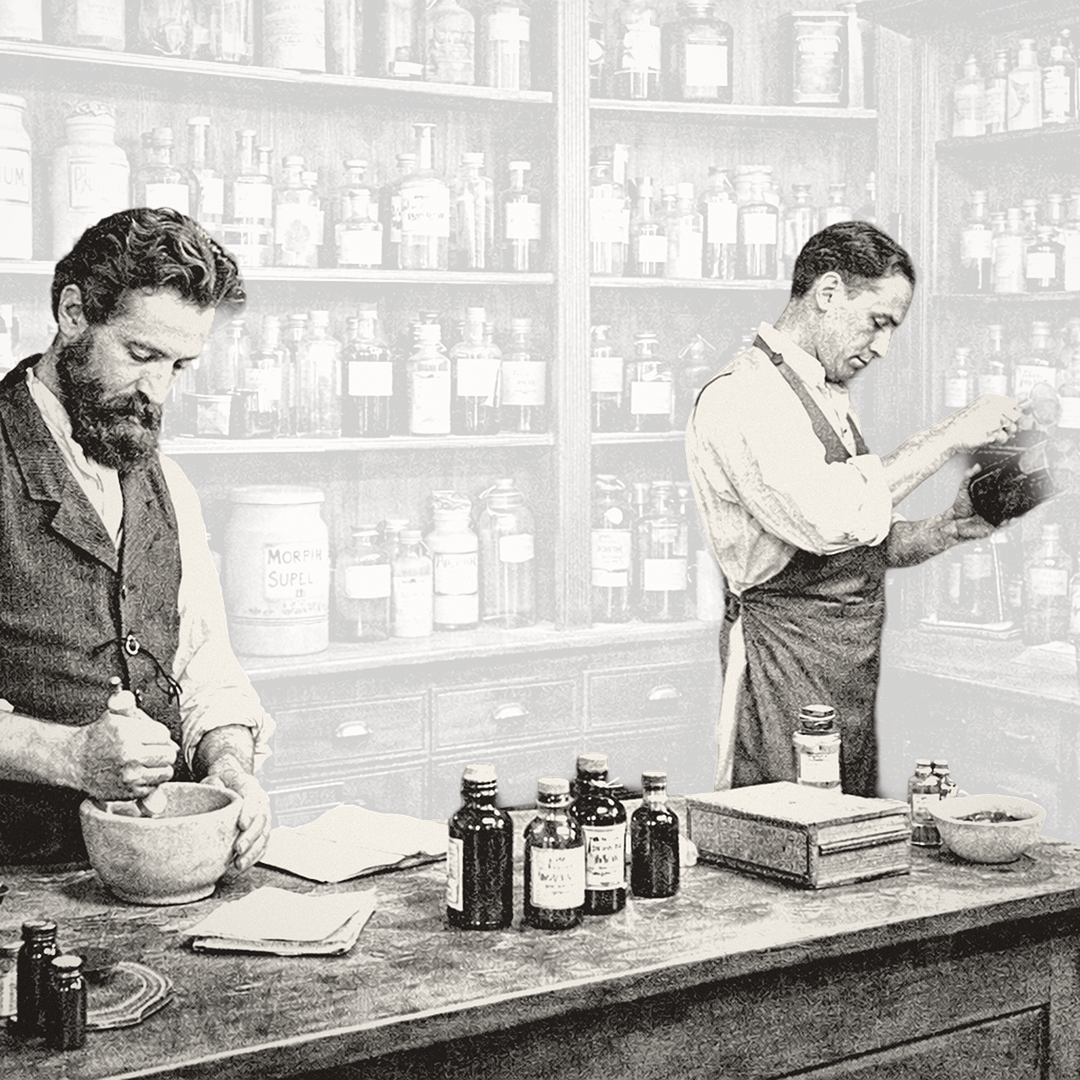
Physicians and medical professionals from across the country gathered in Washington, D.C., to establish the U.S. Pharmacopeia.


Twenty-five health innovations that changed the world.



It’s easy to overlook an official reference book as a breakthrough. But the USP represents a uniquely American adaptation of a global tradition. It took the rigorous science of Europe and applied it to a democratic, decentralized society.
The U.S. Pharmacopeia still exists today, setting quality standards for roughly 90% of medicines used in the United States. It didn’t invent new drugs, but it created the foundation that made modern drug development, testing, and trust possible.